What it does
Reactive Reverb analyses the incoming signal and uses what it hears to steer the reverb itself: envelope and spectral changes are mapped into the space in real time, with REACTIVITY controlling how strongly the analysed source steers the reverb, DEPTH shaping the size and pre-delay of the space, and LENGTH setting the decay - from tight ambience up to 12-second tails, and beyond into regenerating, self-building tails that are automatically kept no louder than the sound feeding them. A REACT switch turns the signal-reactive behaviour off entirely when you want a conventional static reverb.
Before the signal reaches the reverb, MOD can reshape the send and PITCH sets how much of an octave-shifted layer blends into it, from a full down-shift through to a full up-shift; inside the engine itself, diffusers, early reflections, a modulated feedback network and shimmer are coloured further by DRIVE, which adds saturation inside the reverb engine, and OVERTONES. The result is source-driven movement - a space that moves with the performance instead of sitting behind it.
In Action
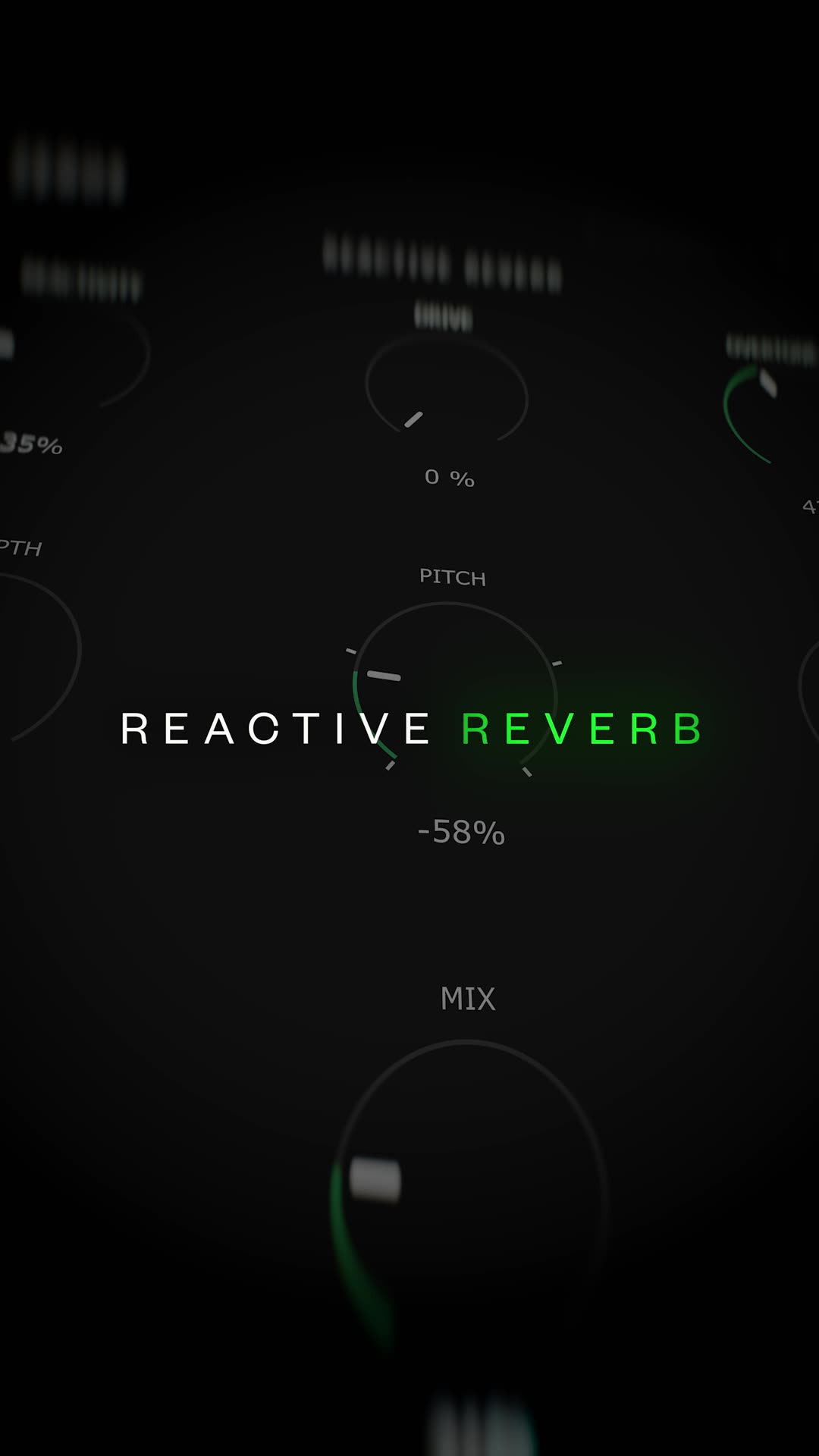
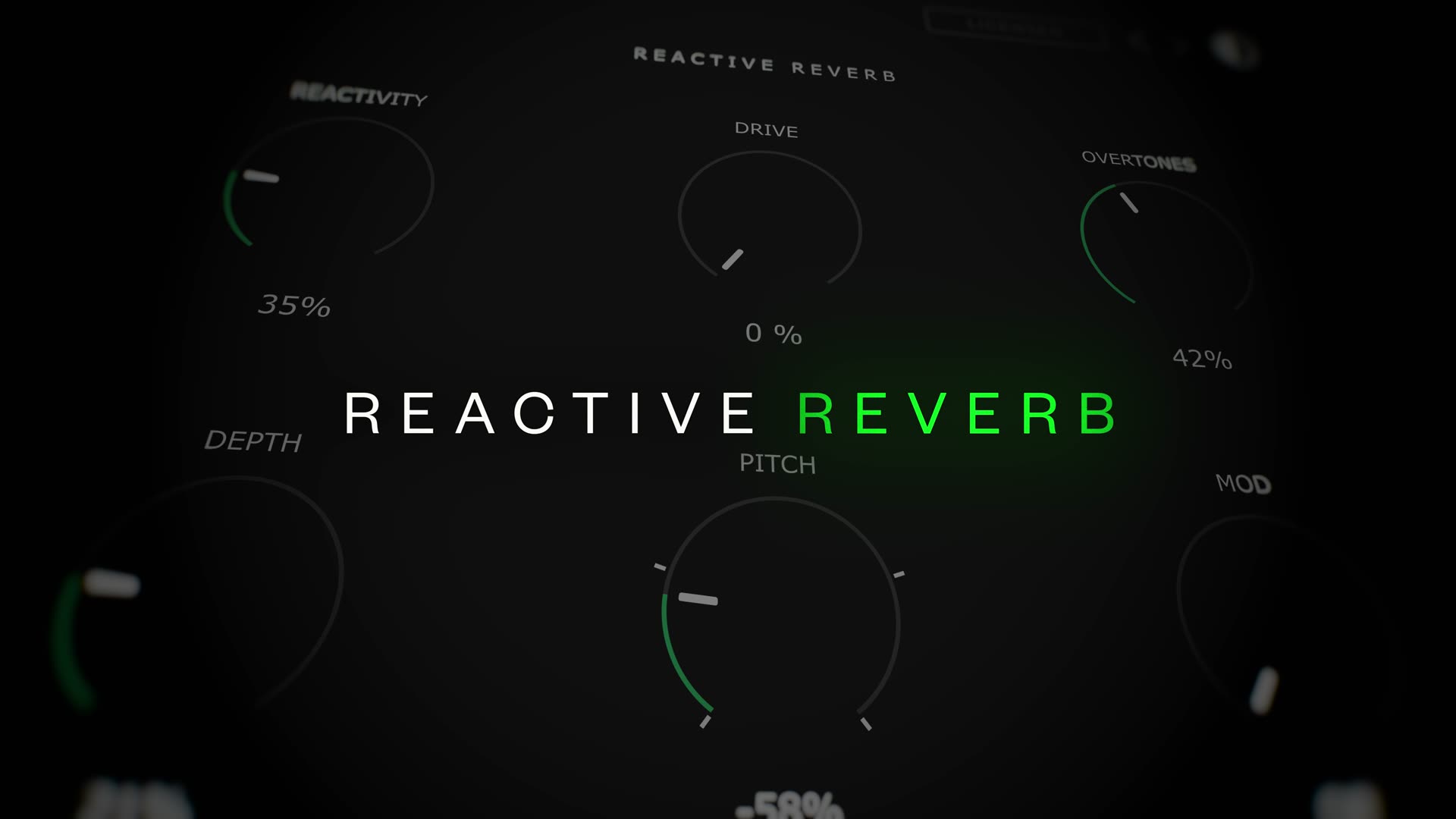
Highlights
- Signal-reactive FDN (feedback delay network) reverb engine
- Internal reverb parameters continuously shaped by analysis of the incoming signal
- REACTIVITY controls how strongly the analysed source steers the reverb, with a REACT switch to disable reactivity for a conventional static reverb
- DEPTH shapes the size and pre-delay of the space
- LENGTH sets the reverb decay from tight ambience to 12-second tails; above 75% the tail regenerates and self-builds, automatically held no louder than the input
- DRIVE adds saturation inside the reverb engine
- MOD adds send modulation from subtle movement into high-rate modulation territory
- PITCH sets the level of an octave-shifted send into the reverb, from −100% to +100% - release a drag near a marked position (−100/−50/+50/+100%) to snap to it
- OVERTONES adds harmonic content inside the reverb engine
- EXPORT MODE - 4x oversampling for higher-quality final renders
Requirements
- Formats
- VST3 · AU
- Windows
- Windows 64-bit (VST3)
- macOS
- VST3 and AU (Logic Pro)
- Licensing
- Offline ZERO9 licence file - no machine binding or mandatory online activation.
- Demo
- Free to download. Runs in demo mode until you add a licence.
VST3 · Windows 64-bit · macOS · AU (macOS · Logic Pro)
FAQ
- Can I try it before buying?
- Yes. Free to download. Runs in demo mode until you add a licence.
- How do I receive my licence?
- Your licence is emailed automatically after purchase, typically within a minute or two.
- Do I need to be online to activate?
- No. It uses an offline ZERO9 licence file - no machine binding or mandatory online activation.
- What is Export Mode?
- EXPORT MODE - 4x oversampling for higher-quality final renders
- Is there a bundle?
- Yes. The Complete Suite includes all eight paid ZERO9 plugins for £100, saving £40 against buying them individually.